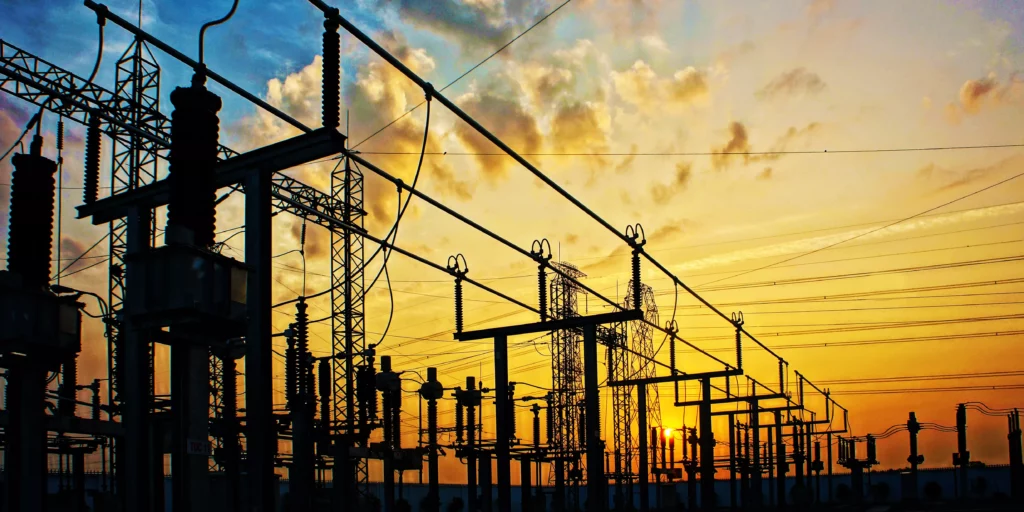

Delta-X Research has received the 2022 North American Enabling Technology Leadership Award from Frost & Sullivan, one of the world's leading growth strategy and market intelligence firms, for Transformer Oil Analyst™ (TOA) with Reliability-based Dissolved Gas Analysis (R-DGA).
The award recognises companies that have developed enabling technologies with the potential to fundamentally change market dynamics and customer outcomes. Frost & Sullivan's evaluation assessed Delta-X Research against a framework of criteria including technological innovation, commercial impact, competitive differentiation, and demonstrable customer value.
What the Award Recognises: The Transition from Screening to Risk Management
The Frost & Sullivan recognition centres on R-DGA's transformation of how dissolved gas analysis is used in transformer asset management. The conventional DGA approach, comparing a transformer's gas concentrations against the condition limits in IEEE C57.104-2019 [1], functions as a screening test. Concentrations above certain values trigger further investigation; concentrations below those values are treated as normal. This approach is simple to apply and provides a useful safety net, but it has fundamental limitations for fleet management.
Threshold-based interpretation evaluates each DGA sample in isolation. It cannot account for the trajectory of gas accumulation over time, the transformer's age and service history, or how unusual its gas profile is relative to the actual distribution of gas data in a real transformer population. Dukarm et al. [2] demonstrated that conventional DGA indicators frequently generate false alarms, flagging transformers operating within normal population parameters for their age and service conditions, while simultaneously missing genuine deterioration in transformers whose gas concentrations remain below thresholds even as their cumulative fault severity is increasing.
R-DGA was developed to solve this problem by grounding DGA interpretation in statistical analysis of transformer failure data from a large, validated population of transformer histories [2][3]. Rather than comparing concentrations against fixed limits, it computes:
CSEV (Cumulative Severity): the total accumulated fault energy indicated by the transformer's full dissolved gas history, normalised against the reference population. CSEV answers the question: how unusual is this transformer's gas accumulation history relative to all transformers in the population database? A high CSEV indicates a transformer whose cumulative gas profile places it in a region of the population associated with elevated failure probability.
HF (Hazard Factor): the reliability-engineering metric derived from the empirical relationship between CSEV level and observed failure probability in the population data [2]. HF provides a forward-looking estimate of failure risk at current condition: not "is this concentration above a threshold?" but "given this transformer's cumulative severity history, where does the population data say it sits on the risk curve?"
Together, CSEV and HF turn DGA from a reactive screening test, responding to threshold exceedances after they occur, into a forward-looking risk management tool: identifying which transformers are accumulating fault severity at rates that the population data associates with elevated failure probability, before any threshold is crossed.
The Economic Case
Transformer failures are among the most costly events in utility asset management. Replacement costs for large power transformers typically exceed USD $1 million for the equipment alone, with delivery lead times of 18–24 months for custom-specification units [4]. The associated costs of grid disruption, emergency procurement, temporary generation, and outage compensation can multiply this figure substantially. CIGRE TB 812 [4] documents failure rate and consequence data across a broad international transformer population.
The economic argument for R-DGA methodology is that the cost of false alarms, unnecessary maintenance interventions triggered by threshold exceedances in transformers that are within normal population parameters, and the cost of missed detections, failures in transformers whose deterioration was not caught before the threshold was crossed, are both avoidable with a more accurate analytical method.
As Paul Mushill, Principal Engineer at Ameren Missouri, put it in the context of this recognition: "If we prevent one transformer failure by a proactive replacement, the find pays for all services rendered and subscription costs."
Fifteen of the top 20 US utilities have deployed TOA to manage their transformer fleets. The commercial scale of that adoption, across organisations that independently evaluated the methodology and its alternatives, is a validation of R-DGA's operational value beyond any individual award.
Thirty Years of Methodology Development
Delta-X Research was founded in Victoria, British Columbia, in 1992. Jim Dukarm's first published work on the statistical interpretation of transformer oil analysis reports [3] was presented to the Doble technical community in 1993. This marked the beginning of three decades of continuous methodology development and validation.
The Frost & Sullivan recognition validates not just the current state of TOA and R-DGA, but the approach Delta-X Research has taken throughout: that the right way to improve DGA is to ground it more deeply in the actual statistical relationship between gas data and transformer failure, and to build software that makes that methodology accessible to every engineer who manages transformer fleets.
For technical background on R-DGA methodology, visit the Science page. For product details, see the TOA page.
References & Further Reading
- [1]IEEE C57.104-2019, “IEEE Guide for the Interpretation of Gases Generated in Mineral Oil-Immersed Transformers” IEEE, 2019.
- [2]Dukarm, J.J., Draper, D., Arakelian, V.K., “Improving the Reliability of Dissolved Gas Analysis” IEEE Electrical Insulation Magazine, 2012.
- [3]Dukarm, J.J., “Transformer Oil Analysis Report Interpretation by Statistical Analysis” Minutes of the 60th Annual International Conference of Doble Clients, 1993.
- [4]CIGRE Working Group A2.49, “Transformer Reliability Survey” CIGRE Technical Brochure 812, 2020.
- [5]Frost & Sullivan, “2022 North American Enabling Technology Leadership Award: Transformer Oil Analyst with R-DGA” Frost & Sullivan Best Practices Recognition, 2022.

Delta-X Research develops Transformer Oil Analyst™ (TOA), the market-leading tool for managing and interpreting insulating fluid test data for high-voltage apparatus. Founded in 1992 and based in Victoria, BC, Canada, the team applies Reliability-based DGA methodology to help utilities worldwide assess transformer health and prioritise fleet maintenance decisions.
Related Articles
Delta-X Research: Over Three Decades of DGA Innovation
Founded in Victoria, BC in 1992, Delta-X Research has spent more than 30 years advancing the science and practice of dissolved gas analysis for transformer asset management. This article traces the development of R-DGA methodology, the TOA software platform, Monitor Watch, and the role of peer-reviewed research in grounding a commercial analytical tool in validated science.