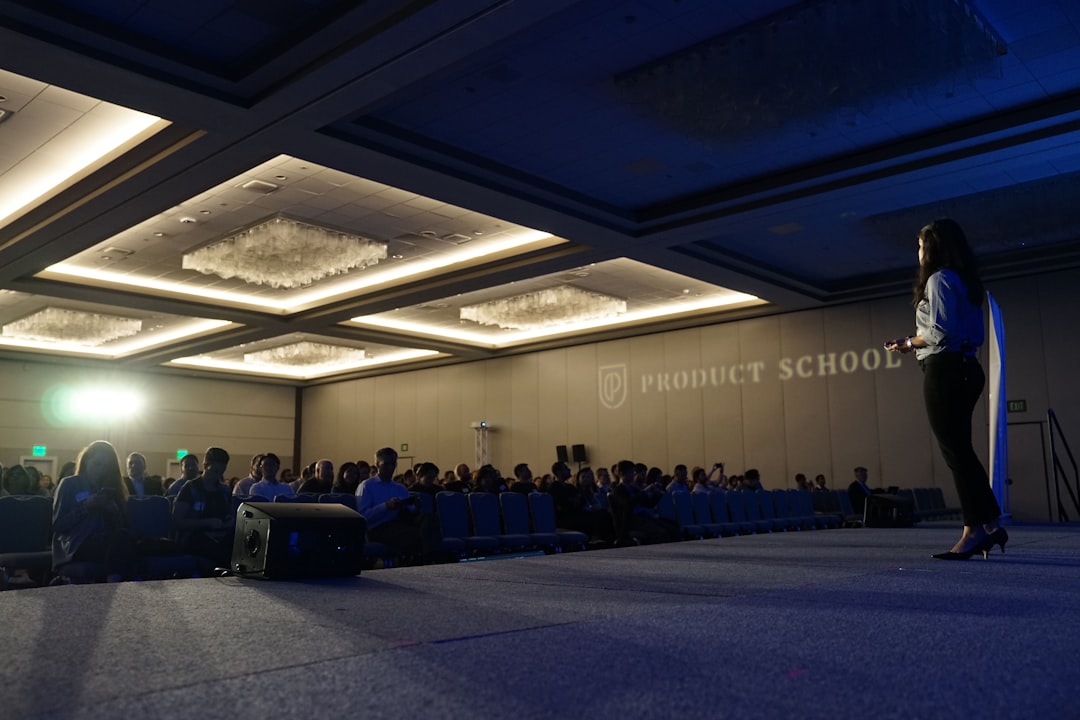
In March 2026, Delta-X Research's Sales Director Kayla Whitesel travelled to the United Kingdom to present at Energy Technology Live, one of the UK's principal conferences for professionals working in distributed energy, grid modernisation, and power asset management. The session, delivered as part of the Distributed Energy Show programme, focused on the limitations of conventional dissolved gas analysis (DGA) and the case for adopting Reliability-based DGA as the scientific foundation for transformer maintenance decisions.
What Is Energy Technology Live?
Energy Technology Live is an annual UK event that brings together engineers, asset managers, and decision-makers from utilities, industrial operators, and technology providers across the electricity sector. The conference covers a broad range of topics from renewable integration and grid stability through to transformer maintenance, protection, and lifecycle management.
The Distributed Energy Show is the specific strand within ETL that addresses asset-level monitoring, condition assessment, and the practical challenges of managing distributed grid infrastructure at scale. It draws a technically sophisticated audience: engineers who are responsible for maintenance programmes and who understand the constraints of working with ageing equipment in a grid that is under increasing pressure from the energy transition.
Three Points from the Session
Kayla's presentation addressed a question that is increasingly pressing for UK utilities: how to move beyond traditional DGA approaches that were developed decades ago and that carry well-documented limitations when applied to modern fleet management contexts.
The session's core arguments, as presented at ETL26, were:
1. Conventional DGA methods generate false alarms that drive unnecessary maintenance spend.
The threshold-based interpretation methods codified in standards such as IEEE C57.104-2019 [1] and IEC 60599:2022 [2] identify gas concentrations or ratios that warrant attention. However, because these thresholds do not account for the statistical distribution of gas data across real transformer populations, they frequently flag transformers that are functioning within normal parameters for their age, design, and service history. The result is unnecessary maintenance activity: costly interventions for units that did not require them.
Research published in IEEE Electrical Insulation Magazine by Dukarm et al. [3] demonstrated that conventional DGA indicators often overstate fault probability when applied without population-context adjustment. In large fleets, this translates to significant wasted expenditure.
2. Those same methods can miss developing faults across a fleet.
The second problem is the inverse of the first. Because conventional threshold methods are calibrated to the average of a population, they can fail to detect meaningful deterioration in units whose gas profiles remain nominally below threshold values, even as their rate of change, cumulative severity, or fault energy index indicates genuine progression.
This is particularly relevant for utilities managing large fleets of diverse transformer types, vintages, and loading profiles. A single concentration threshold applied uniformly across hundreds of units of different designs will inevitably produce both over- and under-alerting. The scientific literature is clear that without population-level context and statistical weighting, individual gas concentration limits are insufficient for reliable fault detection [1, 5].
3. Reliability-based DGA provides a scientifically validated, quantitative foundation for prioritising transformer maintenance and replacement.
Reliability-based DGA (R-DGA), developed by Delta-X Research founder Jim Dukarm, Ph.D., addresses both limitations by grounding the assessment in statistical analysis of failure data from a large, validated transformer population [3]. Rather than comparing a transformer's gas concentrations against fixed thresholds, R-DGA computes two metrics:
- CSEV (Cumulative Severity): A measure of the total accumulated fault energy indicated by the transformer's dissolved gas history, normalised against the transformer population. It answers the question: how unusual is this transformer's cumulative gas profile relative to all other transformers we have data on?
- HF (Hazard Factor): A reliability-engineering metric derived from failure rate analysis. It indicates how the transformer's current condition relates to the statistical probability of failure.
Together, CSEV and HF provide a ranked, defensible view of fleet risk that updates automatically as new sample data is imported. This is the methodology at the core of Transformer Oil Analyst™ (TOA), Delta-X Research's decision-support platform.
The UK and European Context
One question that frequently arises when presenting R-DGA methodology to European audiences is its relationship to IEC 60599:2022 [2], the standard that governs DGA interpretation practice for most UK and European utilities, as distinct from IEEE C57.104-2019 [1] which is the dominant reference in North America.
R-DGA methodology is designed to complement, not replace, either standard. The CSEV and HF metrics add a quantitative severity dimension that operates independently of which regional standard framework an organisation uses. A utility can apply IEC 60599 for its baseline fault type diagnosis and use R-DGA within TOA for fleet prioritisation; the two approaches are not in conflict.
CIGRE Technical Brochure 771 [4], produced by Working Group A2.43, is the primary international reference for advanced DGA interpretation beyond the regional standards. Delta-X Research's ongoing engagement with CIGRE, through Jim Dukarm's participation in Study Committee A2 working groups, ensures that R-DGA methodology remains current with the best available international research.
Reception at ETL26
The session generated substantial interest from UK utility engineers and asset managers, many of whom are managing transformer fleets that are ageing into the risk window, with units built in the 1970s and 1980s that are approaching or exceeding their original design life. In this context, the ability to rank fleet risk quantitatively and defend maintenance prioritisation decisions with reference to published methodology has obvious value.
Kayla noted that conversations after the session often centred on two themes: the practical process of transitioning away from manual threshold-checking in spreadsheets, and the evidence base for R-DGA's performance relative to conventional methods. Both are questions the Delta-X Research team is well positioned to address. The TOA platform handles the first, and Jim Dukarm's published research addresses the second [1, 5].
Continuing the Conversation
If you attended Energy Technology Live 2026 and would like to continue the discussion from Kayla's session, or if you are a UK or European utility exploring alternatives to conventional DGA practice, Kayla is available to connect directly via LinkedIn.
For technical background on the Reliability-based DGA methodology, visit the Science page. For an overview of how TOA implements R-DGA for fleet management, visit the TOA product page.
Delta-X Research will continue to engage with the UK and European utility community at future events. Follow our LinkedIn company page for upcoming conference announcements.
References & Further Reading
- [1]IEEE C57.104-2019, “IEEE Guide for the Interpretation of Gases Generated in Mineral Oil-Immersed Transformers” IEEE, 2019.
- [2]IEC 60599:2022, “Mineral oil-filled electrical equipment in service: Guidance on the interpretation of dissolved and free gases analysis” IEC, 2022.
- [3]Dukarm, J.J., Draper, D., Arakelian, V.K., “Improving the Reliability of Dissolved Gas Analysis” IEEE Electrical Insulation Magazine, 2012.
- [4]CIGRE Working Group A2.43, “DGA in Non-Mineral Oils and Load Tap Changers and Improved DGA Diagnosis Criteria” CIGRE Technical Brochure 771, 2019.
- [5]Dukarm, J.J., “Estimation of Measurement Uncertainty in the Analysis of Transformer Insulating Oil” International Journal of Metrology and Quality Engineering, 2014.

Related Articles
Delta-X Research at the IEEE Rural Electric Power Conference 2026
Sean Casey is representing Delta-X Research at the IEEE Rural Electric Power Conference, connecting with rural and municipal utility engineers on how Reliability-based DGA helps smaller utility operations manage transformer health analytics, identify early fault indicators, and prioritise fleet maintenance with limited internal resources.