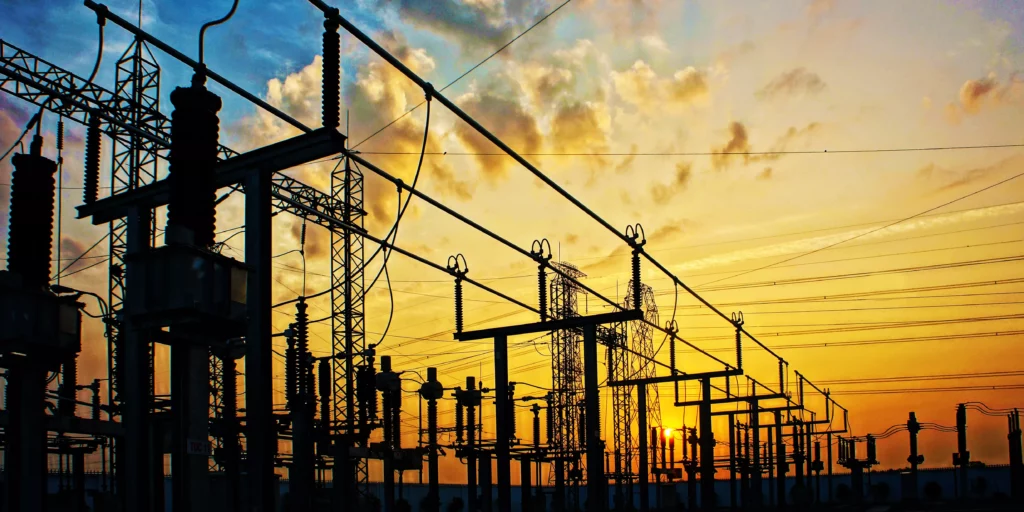
The scale of North America's transformer replacement challenge has been discussed in the power industry for years. In 2026, it is no longer a future concern; it is the present operating reality for most transmission utilities. Understanding the statistical basis of that risk, the structural constraints on addressing it, and the analytical tools available to manage it is the foundation of any credible asset management programme.
The Statistical Reality of Transformer Ageing
CIGRE Technical Brochure 812 [1], the most comprehensive international survey of power transformer reliability data, documents the failure rate distribution across age cohorts with precision. The data shows that transformer failure probability is not uniform over the service life. Units in early service show low failure rates; failure probability then increases significantly after the 30–40 year mark as insulation systems age, mechanical tolerances accumulate, and the cumulative effects of loading cycles, temperature, and fault stress compound.
A large fraction of the North American transmission transformer fleet was installed between 1950 and 1990. In 2026, that cohort spans ages of 36 to 76 years, placing a substantial proportion of critical infrastructure assets in or beyond the age range where CIGRE TB 812 [1] documents elevated failure probability. CIGRE TB 227 [2] characterises the key degradation mechanisms: thermal ageing of cellulose insulation (which is irreversible and cannot be remediated by oil replacement), moisture ingress, load cycling fatigue in mechanical components, and the cumulative effect of short-circuit events on winding geometry.
The uncomfortable arithmetic is that design life estimates of 30–40 years for large power transformers, which are conservative approximations rather than hard failure thresholds, describe equipment that is now the average, not the outlier, in many utility transmission fleets. A transformer that has been in service since 1975 is 51 years old in 2026. Such units exist at scale across the North American grid.
The Replacement Capacity Constraint
The response to fleet ageing cannot simply be mass replacement, for a structural reason: manufacturing capacity does not support it. Large power transformers, particularly the high-capacity, high-voltage units installed in transmission substations, are complex, custom-engineered equipment manufactured by a small number of facilities globally. Lead times for new units have regularly exceeded 18–24 months in recent years; during periods of concentrated demand, utilities have reported lead times extending to 30 months or beyond.
This creates a fundamental mismatch between the pace at which at-risk transformers need attention and the pace at which replacements can be procured and installed. A utility that identifies a transformer requiring urgent replacement may be looking at an 18-month window in which that unit must remain in service. The operational challenge is not procurement scheduling; it is managing the risk during that window with the best available information about the unit's condition.
The consequence is that condition-based maintenance, rather than age-based replacement scheduling, becomes the practical framework. IEEE C57.91-2011 [3] recognises this through its thermal loading framework, which provides the basis for understanding how each loading cycle contributes to insulation ageing, but condition monitoring through DGA provides the most direct evidence of how that ageing is actually manifesting in each specific transformer.
Condition-Based Management With R-DGA
The operational tool for managing an ageing fleet in this environment is rigorous, population-normalised DGA analysis. The limitation of threshold-based DGA interpretation, which compares individual gas concentrations against the fixed limits in IEEE C57.104-2019, is that it does not distinguish between a transformer that has been stable at a given concentration for ten years and one whose concentrations have tripled in the past six months. Both may present similar concentration profiles while representing fundamentally different risk levels. Dukarm et al. [4] demonstrated this limitation explicitly: threshold methods produce both false positives (flagging stable, normal-for-age profiles) and false negatives (missing accelerating deterioration below threshold levels).
R-DGA methodology addresses this through two population-normalised metrics. CSEV (Cumulative Severity) integrates the total fault energy implied by a transformer's complete dissolved gas history, normalised against a reference population of transformer histories [4]. A high CSEV reflects cumulative fault energy accumulation over years of service, the kind of signal that is most informative for ageing equipment whose current concentration level alone may not distinguish high-history from low-history units. HF (Hazard Factor) maps CSEV to the empirical relationship between condition severity and observed failure probability across the population database [4], providing the fleet risk ranking that is directly actionable for replacement prioritisation.
CIGRE TB 445 [5] provides the framework for condition-based maintenance strategy in which this risk ranking operates. Its core principle, that maintenance intensity should be calibrated to assessed condition and consequence of failure rather than applied uniformly by age, is precisely what population-normalised DGA metrics support. An asset manager who can present HF-ranked fleet data to finance leadership is communicating maintenance priorities with quantitative evidence, not engineering judgment alone.
High-Consequence Assets and the Case for Online Monitoring
For transformers that have been identified as elevated-risk through DGA fleet screening but face extended replacement timelines, continuous online monitoring provides the detection capability that quarterly sampling cannot. The failure progression timeline for active fault conditions, particularly thermal faults in aged insulation and discharging faults in compromised winding insulation, can be weeks rather than months [4]. A 90-day sampling interval is structurally incapable of providing the lead time needed for managed intervention in these cases.
CIGRE TB 630 [6] identifies the criteria for online monitoring deployment: high consequence of failure combined with elevated condition risk, or evidence of active fault progression between periodic sampling intervals. For the transformers that combine advanced age, high HF ranking, and no immediately available spare or backup supply, those criteria are met. Monitor Watch applies the same R-DGA analytical framework to continuous sensor data as TOA applies to laboratory samples, providing unified fleet visibility from a single analytical platform.
Prioritisation Under Constraint
The practical output of a rigorous condition-monitoring programme in 2026 is not a binary list of transformers to replace and transformers to keep. It is a ranked prioritisation, ordered by HF, informed by consequence assessment (load criticality, backup availability, failure cost), and calibrated to what replacement logistics realistically support. A transformer at the top of the HF ranking with no available spare and an 18-month procurement lead time is a different management problem from the same HF ranking with a spare in inventory.
The CSEV and HF metrics from TOA provide the condition-side input to that prioritisation. The consequence assessment requires knowledge of the network: the load served, the switching alternatives available, the cost of an unplanned outage, and the lead time for specific replacement units [5]. Together, they define where to focus inspection, increased sampling, and online monitoring deployment: the tools that manage risk during the window before replacement becomes possible.
The transformer fleet ageing problem is structural and will take years to work through. Managing it effectively requires the best available analytical tools applied to the best available data. For technical background on R-DGA fleet assessment methodology, visit the Science page. For product information on TOA and Monitor Watch, visit their respective product pages, or contact us to discuss your programme.
References & Further Reading
- [1]CIGRE Working Group A2.49, “Transformer Reliability Survey” CIGRE Technical Brochure 812, 2020.
- [2]CIGRE Working Group A2.18, “Life Management Techniques for Power Transformers” CIGRE Technical Brochure 227, 2003.
- [3]IEEE, “IEEE Guide for Loading Mineral-Oil-Immersed Transformers and Step-Voltage Regulators” IEEE Standard C57.91-2011, 2011.
- [4]Dukarm, J.J., Draper, D., Arakelian, V.K., “Improving the Reliability of Dissolved Gas Analysis” IEEE Electrical Insulation Magazine, 2012.
- [5]CIGRE Working Group A2.34, “Guide for Transformer Maintenance” CIGRE Technical Brochure 445, 2011.
- [6]CIGRE Working Group A2.44, “On-line Monitoring of Transformers: The Choice of Monitoring Systems” CIGRE Technical Brochure 630, 2015.

Delta-X Research develops Transformer Oil Analyst™ (TOA), the market-leading tool for managing and interpreting insulating fluid test data for high-voltage apparatus. Founded in 1992 and based in Victoria, BC, Canada, the team applies Reliability-based DGA methodology to help utilities worldwide assess transformer health and prioritise fleet maintenance decisions.
Related Articles
Transformer Health Indices: How Condition Scoring Supports Fleet Decisions
Transformer health indices synthesise multiple condition indicators into a single score for fleet comparison. This article explains how health indices work, how the DGA component should be constructed for maximum accuracy, the structural limitations of aggregated scoring, and how detailed R-DGA analysis provides the diagnostic depth that health indices cannot.