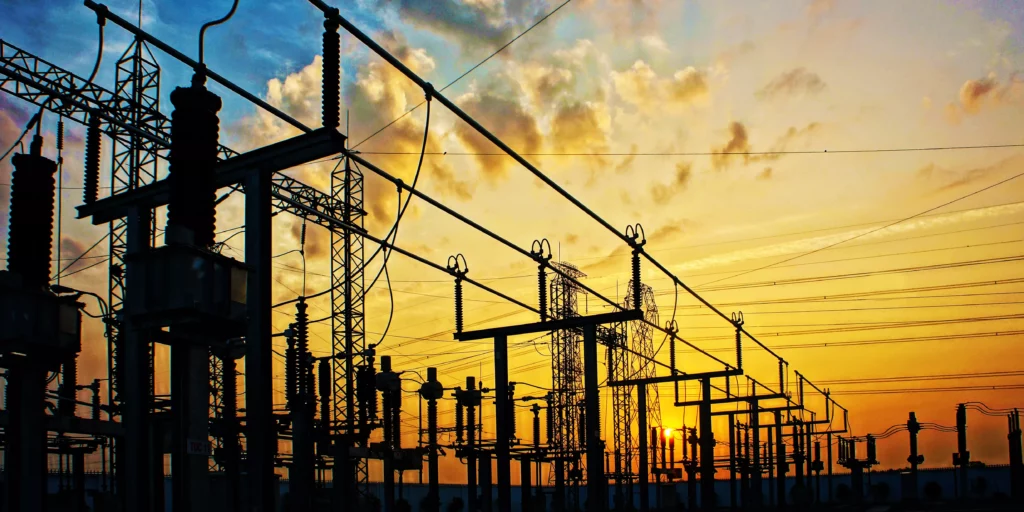
CIGRE Canada, the annual conference of the Canadian National Committee of CIGRE, took place from September 29 to October 2, 2025. Delta-X Research participated in the event, which brought together Canadian power system professionals from utilities, research organisations, manufacturers, and consulting firms for technical sessions and working discussion on grid infrastructure, transformer management, and emerging challenges in the energy transition.
The Canadian Power Sector Context
Canada's transmission infrastructure presents a set of transformer asset management challenges that are distinctive in scale and character. Understanding that context is necessary for calibrating what a rigorous DGA programme needs to deliver in the Canadian operating environment.
Geography and access constraints. Canadian transmission infrastructure spans some of the most remote geography of any power system in the world. Transformers at northern generating stations, remote mine sites, and transmission substations accessible only by seasonal roads or air service carry a failure consequence that is qualitatively different from equipment at accessible urban locations. The cost of an unplanned transformer failure at a remote northern substation includes not just equipment replacement, which for large power transformers typically runs to a multi-million dollar cost with 18–24-month lead times [1], but potentially months of supply disruption, emergency power provision, and logistics costs that can exceed the equipment value. CIGRE TB 812 [1], the Transformer Reliability Survey, establishes the relationship between operating environment and failure consequence severity; remote Canadian operations consistently appear at the high end of both dimensions.
Climate extremes and thermal behaviour. Canadian transmission transformers operate across temperature ranges that span from –40°C winter conditions to summer temperatures that combine ambient heat with high loading to drive hotspot temperatures near thermal limits. Low ambient temperatures affect oil viscosity and dissolved gas solubility in ways that must be accounted for in DGA interpretation [2]. Repeated thermal cycling between wide temperature extremes accelerates both cellulose insulation degradation, generating CO and CO₂ detectable by DGA, and gasket and bushing seal degradation that introduces moisture and complicates condition assessment. DGA programmes that apply interpretation criteria calibrated for temperate operating environments without adjustment for Canadian conditions risk both over- and under-alerting.
Infrastructure age. A large portion of Canadian transmission infrastructure was constructed during the post-war expansion of the 1950s through 1970s. Many units have now significantly exceeded the 30–40 year design life assumed when they were built. CIGRE TB 445 [3] frames the management of such an ageing population as a central challenge for transmission asset managers: how to balance the risk of continued operation against replacement cost and lead time constraints that make wholesale fleet renewal impractical. The answer requires knowing, for each unit, where it sits on the risk curve, which is exactly the question that Reliability-based DGA methodology answers with CSEV and HF metrics [4].
CIGRE Technical Guidance and the Canadian Context
CIGRE's international technical brochures are the primary reference beyond regional standards for transformer condition assessment. Several are directly applicable to the challenges Canadian utilities face.
CIGRE TB 771 [5], produced by Working Group A2.43, is the authoritative reference for DGA interpretation of transformers filled with non-mineral insulating fluids: natural esters, synthetic esters, and silicone oils. As Canadian utilities deploy ester-filled transformers at remote locations for fire risk reduction and environmental performance, the established thresholds in IEEE C57.104-2019 [2] become inapplicable; TB 771 provides the framework for appropriate interpretation. R-DGA methodology in Transformer Oil Analyst™ (TOA) accommodates fluid type as an input parameter, enabling correct population-normalised assessment for non-mineral-oil transformers.
CIGRE TB 812 [1], the Transformer Reliability Survey, is the largest international compilation of transformer failure data. The empirical failure statistics it contains, broken down by transformer type, voltage class, age, and operating environment, are the basis for the population reference data against which the Hazard Factor metric in R-DGA is calibrated [4]. The HF metric's meaning depends directly on the quality and representativeness of this population data; CIGRE's ongoing collection and publication of reliability statistics is what keeps the calibration current.
Delta-X Research's Canadian History
Delta-X Research was founded in Victoria, British Columbia, in 1992, and Canadian utilities have been among the company's closest customers throughout its history. Jim Dukarm's development of R-DGA methodology was informed by the operational reality of managing transformer fleets under precisely the conditions described above: remote access, climate extremes, constrained replacement options, and the compounding risk of ageing equipment.
Jim's participation in CIGRE international working group activities over many years provides a channel through which research from the global transformer community is incorporated into the methodology underlying TOA. The CIGRE framework, spanning both the North American IEEE standards context and the international IEC 60599 [6] framework, positions R-DGA as methodology applicable across the full range of operating environments encountered in Canadian utility practice: from utilities whose DGA programmes follow IEEE C57.104 to those interacting with IEC-based practices through cross-border joint ownership or consulting relationships.
Topics at CIGRE Canada 2025
Technical sessions at the 2025 conference covered transformer condition assessment, life management under the energy transition, integration of distributed energy resources, and grid reliability under changing load profiles. The conversations most relevant to Delta-X Research's work reflected growing interest in quantitative, population-based fleet risk assessment, moving beyond individual transformer interpretation toward a systematic, ranked view of entire fleet health.
This shift in framing, from asking "is this transformer normal or abnormal?" toward asking "how does this transformer rank relative to the rest of our fleet, and what does that ranking tell us about capital planning priorities?", is precisely the question that R-DGA methodology and TOA are designed to answer. Fleet prioritisation under resource constraints is as relevant for Canadian utilities managing large geographic service territories as it is for the large US investor-owned utilities that represent the majority of North American TOA deployments.
Continuing the Conversation
For Canadian utilities exploring improvements to their DGA programme, whether that means a first exposure to R-DGA methodology, an assessment of whether TOA's fleet ranking would reveal new insights from existing data, or a discussion of Monitor Watch for critical remote assets, Delta-X Research is available for direct conversation.
Contact us directly, visit the Science page for the technical foundations of R-DGA methodology, or visit the TOA page and Monitor Watch page for product details.
References & Further Reading
- [1]CIGRE Working Group A2.49, “Transformer Reliability Survey” CIGRE Technical Brochure 812, 2020.
- [2]IEEE C57.104-2019, “IEEE Guide for the Interpretation of Gases Generated in Mineral Oil-Immersed Transformers” IEEE, 2019.
- [3]CIGRE Working Group A2.34, “Guide for Transformer Maintenance” CIGRE Technical Brochure 445, 2011.
- [4]Dukarm, J.J., Draper, D., Arakelian, V.K., “Improving the Reliability of Dissolved Gas Analysis” IEEE Electrical Insulation Magazine, 2012.
- [5]CIGRE Working Group A2.43, “DGA in Non-Mineral Oils and Load Tap Changers and Improved DGA Diagnosis Criteria” CIGRE Technical Brochure 771, 2019.
- [6]IEC 60599:2022, “Mineral oil-filled electrical equipment in service: Guidance on the interpretation of dissolved and free gases analysis” IEC, 2022.

Delta-X Research develops Transformer Oil Analyst™ (TOA), the market-leading tool for managing and interpreting insulating fluid test data for high-voltage apparatus. Founded in 1992 and based in Victoria, BC, Canada, the team applies Reliability-based DGA methodology to help utilities worldwide assess transformer health and prioritise fleet maintenance decisions.
Related Articles
Delta-X Research at the IEEE Rural Electric Power Conference 2026
Sean Casey is representing Delta-X Research at the IEEE Rural Electric Power Conference, connecting with rural and municipal utility engineers on how Reliability-based DGA helps smaller utility operations manage transformer health analytics, identify early fault indicators, and prioritise fleet maintenance with limited internal resources.