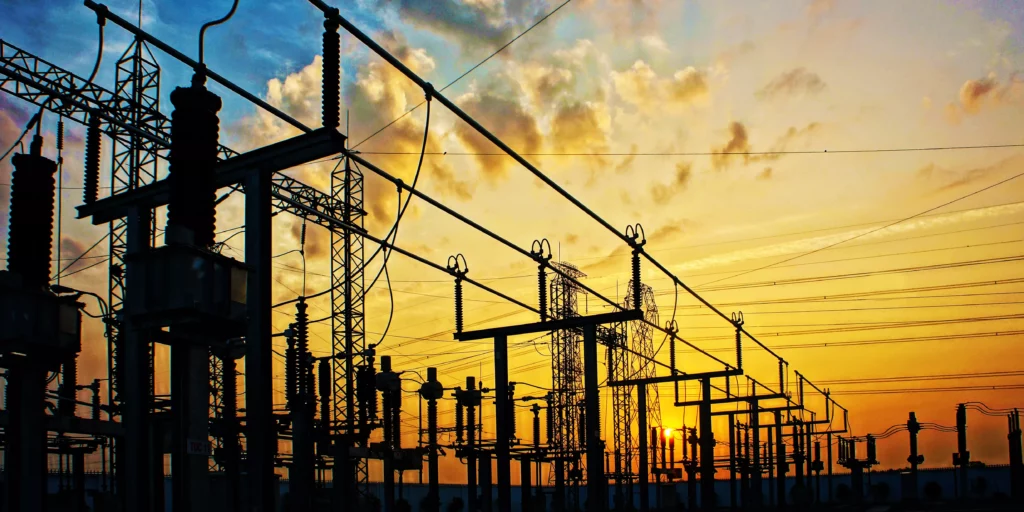

In the late summer of 2024, Delta-X Research founder and President Jim Dukarm, Ph.D. participated in CIGRE Study Committee A2 activities and presented a poster at the 6th International Conference on Transformer Research and Asset Management (the ICTRAM). These two engagements represent the primary channels through which R-DGA methodology connects to the international transformer research community.
CIGRE Study Committee A2: Power Transformers
CIGRE, the Conseil International des Grands Réseaux Électriques (International Council on Large Electric Systems), is the premier international technical organisation for power system engineering. Its technical work is organised through study committees covering major technology areas. Study Committee A2 has responsibility for power transformers: design, testing, manufacturing, condition monitoring, diagnostics, maintenance, and life management.
SC A2 produces Technical Brochures, authoritative reference documents developed by working groups and reviewed internationally, that serve as benchmarks for transformer practice worldwide. Several CIGRE Technical Brochures are directly foundational to DGA methodology and practice:
CIGRE TB 771 [1], produced by Working Group A2.43, provides advanced guidance on DGA interpretation for non-mineral oils and load tap changers and proposes improved DGA diagnosis criteria beyond those in regional standards. This brochure is the primary international reference for utilities deploying transformers with natural ester or synthetic ester insulating fluids, for whom the threshold values in IEEE C57.104-2019 [2] and IEC 60599:2022 [3] are not directly applicable.
CIGRE TB 812 [4], produced by Working Group A2.49, presents the results of CIGRE's comprehensive transformer reliability survey: failure mode data, failure rate statistics, and analysis of the relationship between condition monitoring findings and subsequent failures. This empirical failure data underpins the reliability-engineering approach taken by R-DGA methodology, specifically the Hazard Factor metric that maps CSEV values onto observed failure probability distributions [5].
Jim Dukarm has participated in CIGRE Study Committee A2 working group activities over many years, contributing to DGA interpretation methodology development, co-authoring technical contributions, and helping ensure that R-DGA research is reviewed by and reviewed against the broadest available international expertise.
The 6th ICTRAM
The International Conference on Transformer Research and Asset Management is a biennial academic and engineering conference that draws researchers and practitioners from across the globe. ICTRAM presents peer-reviewed research covering the full scope of transformer technology: insulation systems, thermal behaviour, partial discharge, DGA methodology, condition assessment, life extension, and asset management frameworks.
The poster presentation format at ICTRAM facilitates sustained direct engagement with other specialists, a format that typically produces more substantive technical dialogue than the question periods following plenary presentations. Jim's poster at ICTRAM 2024 presented R-DGA methodology findings and invited discussion from an audience of international specialists: university researchers, national laboratory staff, transformer manufacturers, and utility engineers from dozens of countries.
The international character of the ICTRAM audience is particularly valuable for methodology development. DGA interpretation practice varies significantly by region. IEEE C57.104-2019 [2] governs North American practice; IEC 60599:2022 [3] is the primary reference in Europe, Australia, and much of Asia. CIGRE guidance [1] is referenced globally. An R-DGA methodology that has been tested against and discussed with practitioners working in all three of these frameworks, and with researchers developing the next generation of standards, is more robust than one validated only against a single regional dataset.
Measurement Uncertainty and Population Statistics
One theme of Jim's research presentations at international conferences has been measurement uncertainty in DGA, a subject addressed directly in his published work [6]. The coefficient of variation for replicate DGA measurements at accredited laboratories is typically in the range of 10–20% for most dissolved gases, and can be higher for gases present at low concentrations. This level of variability is sufficient to move individual measurements across condition boundaries in IEEE C57.104 [2] and IEC 60599 [3], creating apparent condition changes that reflect laboratory variation rather than transformer deterioration.
R-DGA methodology addresses this systematically. The CSEV metric integrates fault severity over the transformer's full history [5], smoothing out single-point measurement noise through accumulation. The Hazard Factor is derived from a population of historical transformer data [5], so it is calibrated to represent the statistical significance of a given CSEV level within the actual distribution of transformer gas profiles, not against an idealised threshold. The international peer review that occurs at events like ICTRAM is one mechanism by which these methodological choices are validated against the broader research community's understanding.
Why International Research Engagement Matters
The science behind transformer diagnostics advances through international collaboration. Research findings from utilities operating in different climates, with different transformer populations and different grid architectures, collectively inform a more complete understanding of transformer failure mechanisms than any single national dataset can provide. When Jim presents at CIGRE SC A2 and ICTRAM, he is both contributing R-DGA methodology findings to that collective body of knowledge and receiving critical feedback that informs ongoing methodology development.
This engagement is why Transformer Oil Analyst™ (TOA) reflects the current state of the international scientific consensus on dissolved gas analysis, not a fixed methodology developed at a single point in time. The CIGRE Technical Brochures cited in TOA's analytical foundations are not static; they are revised as new data emerges. Jim's participation in the working groups that produce them ensures that R-DGA remains at the frontier of what that data shows.
For the technical basis of R-DGA methodology and its published foundations, visit the Science page. For an overview of how TOA implements R-DGA for fleet management, visit the TOA product page.
References & Further Reading
- [1]CIGRE Working Group A2.43, “DGA in Non-Mineral Oils and Load Tap Changers and Improved DGA Diagnosis Criteria” CIGRE Technical Brochure 771, 2019.
- [2]IEEE C57.104-2019, “IEEE Guide for the Interpretation of Gases Generated in Mineral Oil-Immersed Transformers” IEEE, 2019.
- [3]IEC 60599:2022, “Mineral oil-filled electrical equipment in service: Guidance on the interpretation of dissolved and free gases analysis” IEC, 2022.
- [4]CIGRE Working Group A2.49, “Transformer Reliability Survey” CIGRE Technical Brochure 812, 2020.
- [5]Dukarm, J.J., Draper, D., Arakelian, V.K., “Improving the Reliability of Dissolved Gas Analysis” IEEE Electrical Insulation Magazine, 2012.
- [6]Dukarm, J.J., “Estimation of Measurement Uncertainty in the Analysis of Transformer Insulating Oil” International Journal of Metrology and Quality Engineering, 2014.
Jim founded Delta-X Research in 1992 and has been at the forefront of transformer dissolved gas analysis research ever since. A PhD mathematician (Simon Fraser University, 1980), Jim has been active in the power industry since 1988, contributed to IEEE and IEC standards development, and is a CIGRE member and IEEE Life Member. His published research underpins the Reliability-based DGA methodology at the core of TOA.
Related Articles
Delta-X Research at the IEEE Rural Electric Power Conference 2026
Sean Casey is representing Delta-X Research at the IEEE Rural Electric Power Conference, connecting with rural and municipal utility engineers on how Reliability-based DGA helps smaller utility operations manage transformer health analytics, identify early fault indicators, and prioritise fleet maintenance with limited internal resources.