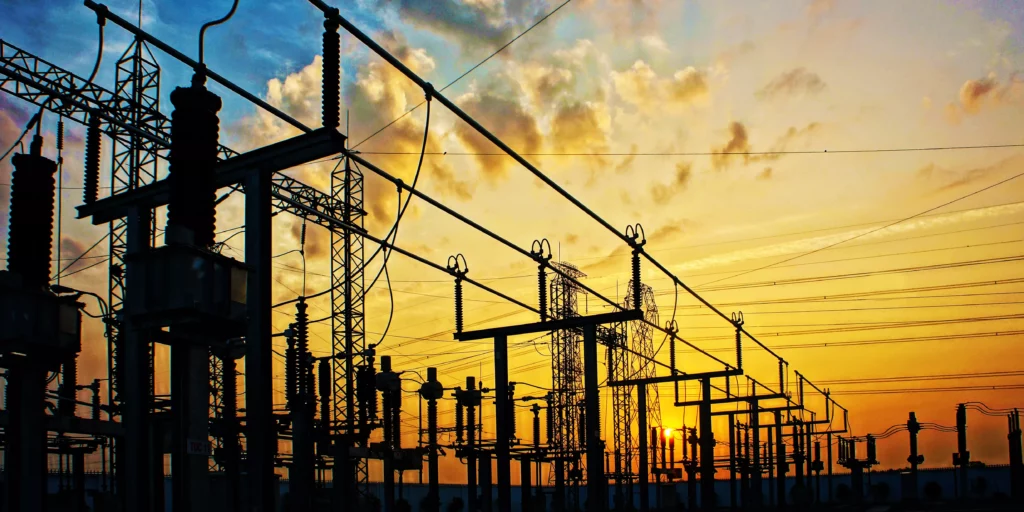
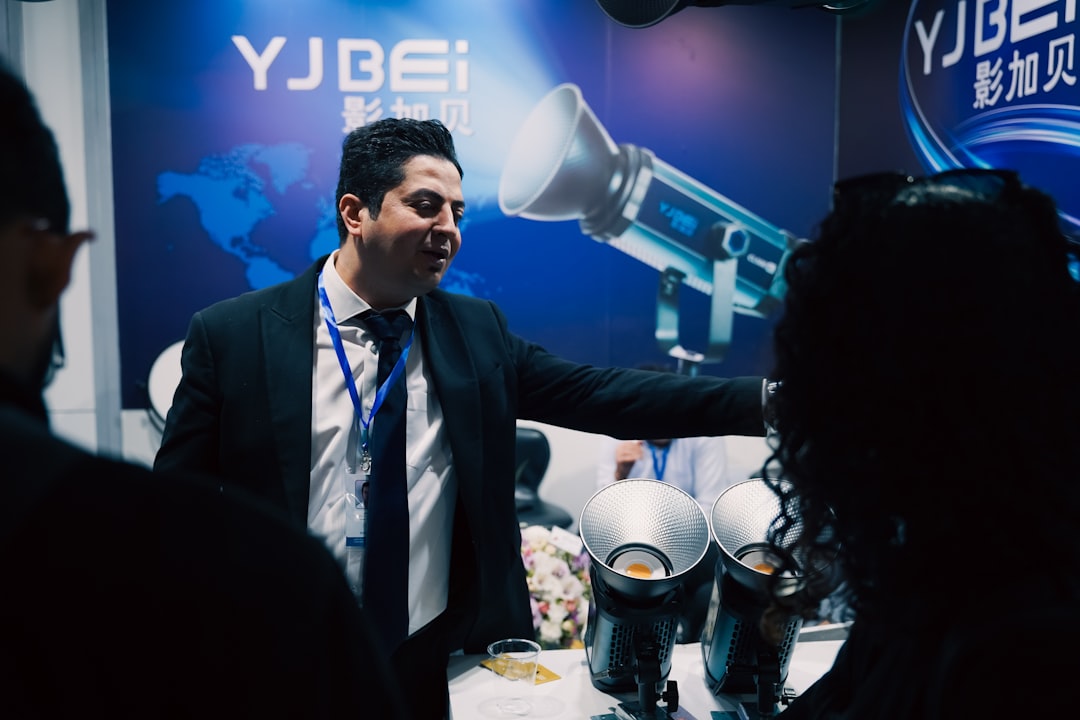
TechCon NA is the annual technical conference for electrical power testing professionals, a gathering built around the work of NETA (the InterNational Electrical Testing Association) and its members, who carry out field testing, commissioning, and condition assessment on high-voltage equipment across North America. Delta-X Research exhibited at Booth #2409, meeting with testing engineers, asset managers, and utility professionals to discuss DGA methodology, fleet management, and the practical application of Reliability-based DGA.
The TechCon NA Audience
TechCon NA draws a particular type of technical professional: engineers and technicians responsible for the actual execution of high-voltage equipment testing programmes. This is not a procurement conference or a strategy event. It is attended by people who work directly with test equipment, interpret results, write assessment reports, and make maintenance recommendations to asset owners.
For dissolved gas analysis, this audience matters. Field testing professionals are often the first to encounter unusual DGA results and the first to have to explain what those results mean to utility asset managers who have little time for ambiguity. The quality of DGA interpretation methodology directly affects the credibility of those recommendations. An analyst who can explain not just what a result indicates but how confident they are in that assessment, and how it relates to the transformer's history, provides substantially more value than one who can only report that a gas concentration has crossed a published threshold.
This is the environment where the distinction between conventional DGA interpretation and Reliability-based DGA becomes concrete rather than theoretical.
Why Methodology Matters: The Threshold Problem
The dominant approach to DGA interpretation in North American practice is defined by IEEE C57.104-2019 [1], which specifies concentration limits for individual dissolved gases and provides guidance on fault classification using ratio methods. The standard is valuable as a baseline and represents decades of accumulated industry experience.
However, threshold-based interpretation has well-documented limitations when applied to fleet management. As Dukarm et al. [2] demonstrated, conventional DGA indicators frequently overstate fault probability when applied without population-level context. Two transformers at identical gas concentration levels can represent very different risks depending on their age, design, service history, and the trajectory by which they reached those concentrations.
The classical gas ratio methods, Rogers ratios [3] and the Duval Triangle [4], were designed to classify fault type: thermal versus electrical, low energy versus high energy. They answer a different question from the one most relevant to asset managers, which is: how serious is this, and what should I do about it? Fault type classification is useful, but severity and urgency are separate dimensions that concentration thresholds and ratio methods do not directly address.
Reliability-based DGA and the CSEV/HF Framework
At Booth #2409, Delta-X Research demonstrated how Transformer Oil Analyst™ (TOA) approaches these limitations through the R-DGA methodology developed by Delta-X Research founder Jim Dukarm, Ph.D. The core outputs are two metrics computed from a transformer's DGA history:
CSEV (Cumulative Severity) integrates the fault energy indicated by the full dissolved gas record, not a single sample, into a single normalised score calibrated against a large, validated reference population of transformer histories [2]. A transformer's CSEV tells you how unusual its cumulative gas profile is relative to all transformers in the database, accounting for natural gas generation variation and measurement uncertainty. A CSEV score at the 90th percentile is a more interpretable statement of risk than a single gas concentration at 180 ppm.
HF (Hazard Factor) maps that cumulative severity score onto the transformer reliability function: the statistical relationship between CSEV level and observed failure probability in the reference population [2]. It answers the operational question: given where this transformer's CSEV sits, what does the historical data say about failure risk at this point?
Together, these metrics produce a ranked list of fleet risk, updated automatically each time new sample results are imported, that identifies which units require immediate attention and which are tracking within normal parameters for their population. For a testing engineer advising a utility on which units to prioritise for follow-up inspection, that ranked list is materially more useful than a set of binary threshold flags.
Monitor Watch for Online DGA Environments
A secondary focus at the booth was Monitor Watch, TOA's capability for processing data from online DGA monitoring systems. Online monitors deployed on critical transmission transformers generate continuous or near-continuous readings from one or more gas sensors, creating a fundamentally different data management problem from periodic laboratory sampling.
The challenge is not acquiring the data; it is interpreting it reliably. Online sensor data carries inherent noise not present in laboratory extractions. A thermal event, a load step, or an atmospheric pressure change can produce apparent gas concentration changes that do not reflect actual transformer condition. Without appropriate signal processing and a consistent analytical framework, online monitor data generates false alarms that erode confidence in the monitoring programme and create unnecessary operational responses.
Monitor Watch addresses this by applying the same R-DGA framework used for laboratory data, after appropriate signal conditioning, to online monitor readings. The result is a single risk picture for each transformer that treats both data streams consistently, preventing the fragmented view that arises when two separate methods are applied to the same asset.
For NETA testing professionals advising utility clients on monitoring programme design, understanding how laboratory sampling and online monitoring complement each other under a unified analytical framework is increasingly relevant as online deployments expand.
CIGRE Guidance and Non-Standard Fluids
A topic that generated discussion at TechCon NA was DGA interpretation for transformers filled with non-mineral insulating fluids: natural esters, synthetic esters, and silicone oils. The established threshold values in IEEE C57.104-2019 [1] were developed for mineral oil; their direct application to other fluids is not valid, as gas generation characteristics differ significantly.
CIGRE Technical Brochure 771 [5], produced by Working Group A2.43, addresses this explicitly and provides guidance on adapting DGA interpretation criteria for alternative fluids. As utilities deploy more ester-filled transformers for fire risk mitigation and environmental reasons, DGA programmes that apply mineral oil thresholds without adjustment are generating systematically unreliable results for those units. R-DGA methodology within TOA accommodates fluid type as a parameter in the analysis, allowing appropriate interpretation regardless of fill medium.
Continuing the Conversation
If you attended TechCon NA 2024 and visited Booth #2409, thank you. If you would like to follow up on any of the topics discussed, including R-DGA methodology, TOA implementation, Monitor Watch integration, or DGA practice for non-standard fluids, contact us directly.
For technical background on R-DGA, visit the Science page. For product details, see the TOA page and Monitor Watch page.
References & Further Reading
- [1]IEEE C57.104-2019, “IEEE Guide for the Interpretation of Gases Generated in Mineral Oil-Immersed Transformers” IEEE, 2019.
- [2]Dukarm, J.J., Draper, D., Arakelian, V.K., “Improving the Reliability of Dissolved Gas Analysis” IEEE Electrical Insulation Magazine, 2012.
- [3]Rogers, R.R., “IEEE and IEC Codes to Interpret Incipient Faults in Transformers, Using Gas in Oil Analysis” IEEE Transactions on Electrical Insulation, 1978.
- [4]Duval, M., “A Review of Faults Detectable by Gas-in-Oil Analysis in Transformers” IEEE Electrical Insulation Magazine, 2002.
- [5]CIGRE Working Group A2.43, “DGA in Non-Mineral Oils and Load Tap Changers and Improved DGA Diagnosis Criteria” CIGRE Technical Brochure 771, 2019.

Delta-X Research develops Transformer Oil Analyst™ (TOA), the market-leading tool for managing and interpreting insulating fluid test data for high-voltage apparatus. Founded in 1992 and based in Victoria, BC, Canada, the team applies Reliability-based DGA methodology to help utilities worldwide assess transformer health and prioritise fleet maintenance decisions.
Related Articles
Delta-X Research at the IEEE Rural Electric Power Conference 2026
Sean Casey is representing Delta-X Research at the IEEE Rural Electric Power Conference, connecting with rural and municipal utility engineers on how Reliability-based DGA helps smaller utility operations manage transformer health analytics, identify early fault indicators, and prioritise fleet maintenance with limited internal resources.