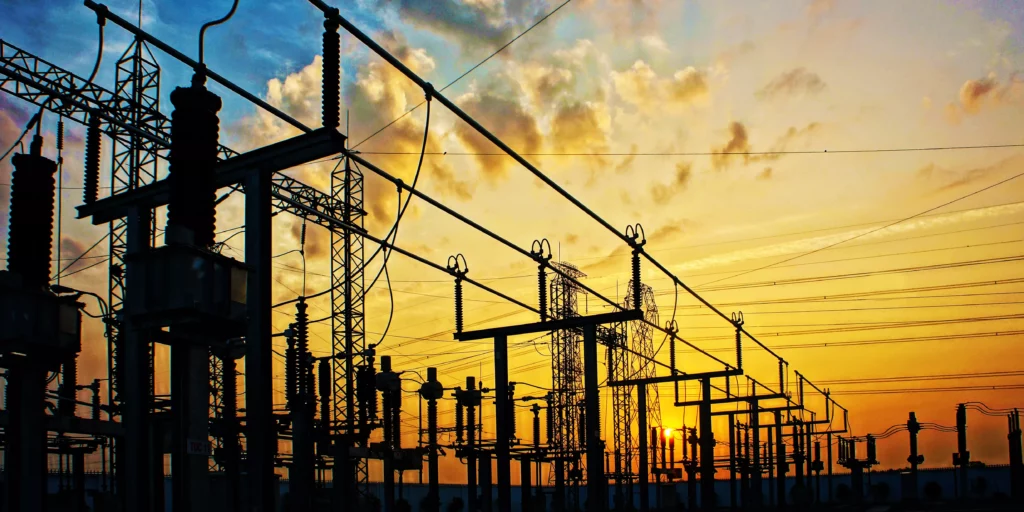
The Life of Transformer conference, held in February 2024, is one of the most focused gatherings in the transformer asset management calendar. Its specific remit, extending the operational life of in-service transformers, draws a technically sophisticated audience of utility engineers, asset managers, and diagnostic specialists working with the defining grid reliability challenge of this era: a large power transformer fleet that is ageing, expensive to replace, and under increasing operational pressure.
Delta-X Research attended the 2024 event and engaged in substantive conversations with utility professionals on three topics that recurred consistently across sessions and informal discussions: how to prioritise maintenance across large fleets systematically, how to integrate online monitoring with periodic laboratory sampling, and how to make the transition from threshold-based DGA interpretation to more reliable, quantitative risk assessment frameworks.
The North American Transformer Fleet: Context for the Conversations
The backdrop to every conversation at the Life of Transformer conference is the age profile of the North American transformer fleet. A substantial proportion of the large power transformer fleet was installed in the 1960s and 1970s, placing much of this infrastructure at or beyond its original 30-to-40-year design life [1]. Power transformers at this age exhibit higher rates of insulation deterioration, increased moisture ingress, and cumulative thermal and electrical stress histories that make them progressively more susceptible to incipient fault development.
Dissolved gas analysis is the primary diagnostic tool for detecting incipient faults before they escalate to failure. The gases generated by thermal decomposition of mineral oil and paper insulation, hydrogen (H₂), methane (CH₄), ethane (C₂H₆), ethylene (C₂H₄), acetylene (C₂H₂), carbon monoxide (CO), and carbon dioxide (CO₂), are measurable at concentrations well below those that precede functional failure [2]. As IEEE C57.104-2019 [2] and CIGRE Technical Brochure 761 [3] both note, the pattern and rate of change of these gases carry more diagnostic information than any single concentration measurement in isolation.
The Fleet Prioritisation Challenge
The central operational challenge for utilities managing hundreds of transformers is not identifying that a DGA result warrants attention: it is identifying which units, across a diverse fleet, represent the highest-priority risks. This is a fleet-level problem, and it is where conventional threshold-based interpretation shows its most significant limitations.
IEEE C57.104-2019 [2] defines concentration levels (L1 and L2) for key gases. These thresholds alert on individual units but were not derived from a statistical model of population-level failure rates. A transformer exceeding the C57.104-2019 L2 threshold for total dissolved combustible gas may or may not represent a higher priority than a transformer at L1 with a steep rate of change. The threshold alone does not resolve this reliably [4].
Reliability-based DGA (R-DGA) addresses this limitation. By computing CSEV (Cumulative Severity) and HF (Hazard Factor) for each transformer, based on its complete gas history analysed against a validated failure population, TOA provides a ranked fleet risk view that accounts for both the magnitude and trajectory of fault activity [4]. Discussions at the Life of Transformer conference returned repeatedly to this distinction: not what a transformer's latest gas results say in isolation, but what its full history indicates about its position in the fleet risk distribution.
DGA Interpretation Methods: The State of Practice in 2024
Conference sessions addressed current DGA interpretation practice, including the relative merits of established methods. The Duval Triangle [5], Rogers Ratio, IEC ratio, and key gas methods each have particular strengths and failure modes. The Duval Triangle method, developed by Michel Duval and refined through CIGRE working group activities [3], is one of the most widely adopted approaches to fault type diagnosis from DGA data. However, the Triangle methods share with all ratio-based approaches a sensitivity to the specific gas composition ratios that can produce ambiguous results when multiple fault types coexist or when gas concentrations are low [5].
R-DGA complements rather than replaces these diagnostic frameworks. TOA incorporates the Duval Triangle and Pentagon methods for fault type identification alongside the CSEV/HF framework for severity assessment and fleet prioritisation. Fault type diagnosis identifies what may be happening; severity assessment determines how urgently it needs attention. Both functions are necessary for a complete asset management response.
Online Monitoring as a Complement to Periodic Sampling
A consistent theme at the 2024 conference was the maturation of the online DGA monitoring market and its implications for asset management. As multi-gas online monitors have become more reliable and cost-effective, the practical case for deploying them on critical or high-risk units has strengthened considerably.
The fundamental value of online monitoring is well established: it provides continuous visibility into transformer gas evolution rather than point-in-time snapshots every three to twelve months [3]. For a transformer exhibiting active fault progression, the interval between periodic samples can encompass significant deterioration. A thermal fault generating ethylene (C₂H₄) and ethane (C₂H₆) at accelerating rates may progress substantially between annual samples; online monitoring provides the early warning that periodic sampling cannot.
Monitor Watch, TOA's online monitoring integration, addresses the practical challenge of managing online monitor data alongside laboratory samples within a coherent analytical framework. By applying the same R-DGA methodology to both data streams, after signal processing to remove noise from continuous sensor readings, Monitor Watch eliminates the inconsistency that arises when two separate analytical frameworks are applied to data from the same transformer. For utilities deploying monitors on critical units while continuing to sample the remainder of their fleet periodically, this consistency matters.
Continuing the Conversation
For organisations that attended the 2024 Life of Transformer conference and want to explore the technical topics in greater depth, the Delta-X Research team is available for individual conversations. Whether you are evaluating DGA software for the first time, looking to improve an existing programme, or considering online monitoring for specific assets, we can help.
Visit the Learn page for technical resources on R-DGA methodology, or contact us to speak with John Brett or the team directly. For background on the science underpinning TOA's analytical approach, the Science page provides a detailed overview.
References & Further Reading
- [1]EEI (Edison Electric Institute), “Transmission Topics: An Overview of Electric Transmission Policy” Edison Electric Institute, 2023.
- [2]IEEE C57.104-2019, “IEEE Guide for the Interpretation of Gases Generated in Mineral Oil-Immersed Transformers” IEEE, 2019.
- [3]Cigre Working Group A2.49, “Condition Assessment of Power Transformers” CIGRE Technical Brochure 761, 2019.
- [4]Dukarm, J.J., Draper, D., Arakelian, V.K., “Improving the Reliability of Dissolved Gas Analysis” IEEE Electrical Insulation Magazine, 2012.
- [5]Duval, M., DePablo, A., “Interpretation of Gas-in-Oil Analysis Using New IEC Publication 60599 and IEC TC10 Databases” IEEE Electrical Insulation Magazine, 2001.
- [6]Dukarm, J.J., “Estimation of Measurement Uncertainty in the Analysis of Transformer Insulating Oil” International Journal of Metrology and Quality Engineering, 2014.

Delta-X Research develops Transformer Oil Analyst™ (TOA), the market-leading tool for managing and interpreting insulating fluid test data for high-voltage apparatus. Founded in 1992 and based in Victoria, BC, Canada, the team applies Reliability-based DGA methodology to help utilities worldwide assess transformer health and prioritise fleet maintenance decisions.
Related Articles
Delta-X Research at the IEEE Rural Electric Power Conference 2026
Sean Casey is representing Delta-X Research at the IEEE Rural Electric Power Conference, connecting with rural and municipal utility engineers on how Reliability-based DGA helps smaller utility operations manage transformer health analytics, identify early fault indicators, and prioritise fleet maintenance with limited internal resources.