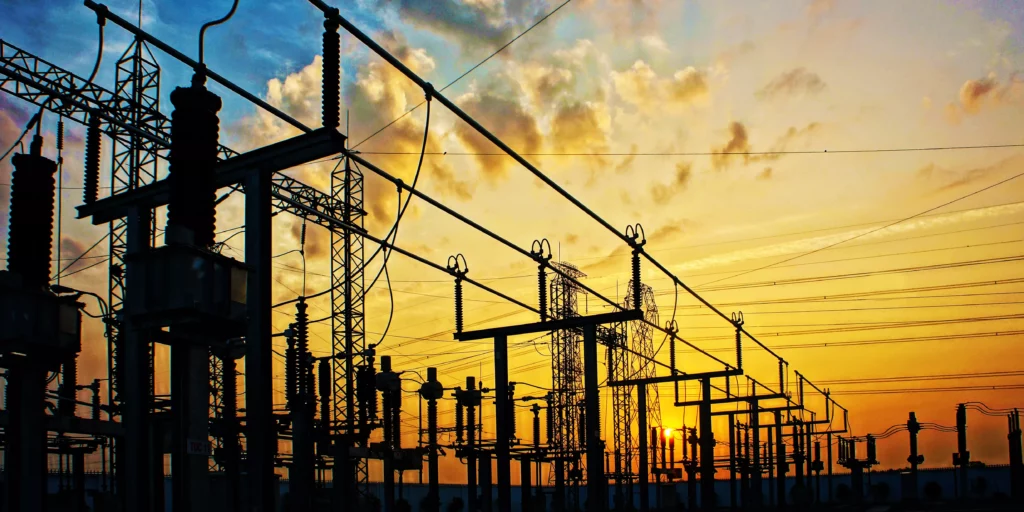

A large power transformer represents one of the highest-value, longest-lead-time assets on a utility's balance sheet. Custom-specification transmission transformers can exceed USD $3–5 million for equipment alone, with manufacturing and delivery lead times of 18–24 months. CIGRE TB 812 [1] documents that transformer failures are among the most costly asset events in the power sector, carrying not only direct replacement costs but indirect costs from supply disruption, emergency procurement, and regulatory scrutiny that frequently exceed the equipment value itself.
In this context, the economic case for proactive DGA-based maintenance is straightforward: the investment in rigorous monitoring and condition assessment is easily justified by the expected value reduction in failure probability and replacement timing. The question is not whether to monitor, since virtually all utilities conduct DGA, but whether the analytical method applied extracts the full information available from the data.
The Ageing Fleet Context
The urgency of proactive maintenance strategy has intensified as North American transmission infrastructure ages. CIGRE TB 445 [2] identifies the management of transformer fleets with a significant proportion of units exceeding their original design life as the central challenge for transmission asset managers in this decade. A transformer installed in 1975 with a 40-year design life assessment is now 50 years in service. Its physical condition may be excellent or seriously degraded depending on loading history, maintenance quality, and fault history. Nameplate age alone provides no reliable indication.
For utilities facing capital budget constraints that prevent wholesale fleet renewal, condition-based maintenance with rigorous analytical foundations becomes the mechanism for making individual replacement decisions that are defensible to regulators, financially sound, and operationally safe. The question for each ageing unit is: what does the condition data actually say about its remaining life and failure risk?
What Proactive DGA Monitoring Requires
A DGA programme capable of supporting life extension decisions has several non-negotiable components.
Consistent, long-term sampling records. The analytical methods that extract the most information from DGA, including Reliability-based DGA's CSEV metric [3], are history-integrating: they accumulate information from the full record of samples over the transformer's history. A transformer with five years of consistent quarterly sampling provides materially more diagnostic information than one with occasional ad hoc results. Building and maintaining consistent records is the foundation of a useful programme.
Appropriate sampling frequency calibrated to condition. IEEE C57.104-2019 [4] recommends increased sampling frequency for transformers in higher condition levels. This is sound practice, but the condition level should be determined by a method sensitive to trajectory, not just current concentration against a threshold. A transformer whose CSEV is rising should receive increased attention even if its current concentrations have not yet crossed a C57.104 condition boundary.
Population-based severity assessment. The limitation of threshold-based DGA for life extension decisions is that it answers the wrong question. "Is this gas concentration above the published limit?" is a less useful question than "Given this transformer's full condition history, where does it sit on the failure risk curve relative to the population?" Dukarm et al. [3] demonstrated that CSEV and HF provide this population-relative, history-integrated assessment, and that this assessment identifies genuine risk that threshold methods miss while reducing false alarms that misdirect maintenance resources.
Integration with other condition indicators. DGA is the primary condition monitoring tool for oil-filled transformers, but life extension decisions benefit from corroborating evidence from other sources: dissolved metals and furans for insulation paper condition, moisture in oil analysis, power factor and tan-delta measurements for insulation dielectric condition, and frequency response analysis for mechanical integrity. CIGRE TB 445 [2] provides the framework for integrating multiple condition indicators into a comprehensive life assessment. DGA provides the continuous monitoring layer; other test methods provide targeted diagnostic depth when DGA indicates a unit warrants closer examination.
Deferring Replacement With a Documented Evidence Base
One of the most financially significant applications of a mature DGA programme is supporting defensible capital deferral decisions. For regulated utilities, capital replacement programmes require regulatory approval; for all utilities, capital budget competition means that deferral decisions must be documented and justified.
A multi-year DGA record showing stable or gradually improving CSEV trend, interpreted through a rigorous method, provides the evidence that a transformer is operating within acceptable risk parameters relative to its population. This is qualitatively different from a statement that "the transformer's DGA results are below threshold", which provides no population context and no information about trajectory, and is substantially more defensible for capital planning purposes.
The inverse is equally important. A transformer whose CSEV has been rising steadily for three years, placing it in the upper quartile of its population's cumulative severity distribution, provides documented justification for prioritised replacement, even if its gas concentrations remain below IEEE C57.104 condition limits. This kind of evidence-based acceleration of a replacement decision, backed by published methodology, is both more credible and more actionable than a threshold exceedance.
The Thermal Life Implication
The relationship between thermal stress and cellulose insulation life is well characterised [5]: the Arrhenius relationship approximately doubles the rate of insulation degradation for every 6–8°C increase in hotspot temperature. This relationship means that the loading history of a transformer, its cumulative exposure to above-normal operating temperatures, is a direct predictor of remaining insulation life.
DGA monitoring tracks the thermal stress history through CO and CO₂ accumulation in the oil. Cellulose degradation at elevated temperatures produces both gases; rising trends in CO and CO₂ alongside other thermal decomposition gases (H₂, CH₄, C₂H₄) indicate that thermal stress is affecting the insulation system [4][6]. The CSEV metric integrates this signal across the transformer's full history, providing a running total of the fault energy that has been deposited in the insulation system over its operating life.
Online Monitoring for the Highest-Consequence Units
For the subset of transformers identified as combining elevated risk metrics (high CSEV/HF) with high consequence of failure, including units serving major load centres, transmission interconnections, or industrial customers with no backup supply, the value of continuous online monitoring through Monitor Watch supplements periodic laboratory sampling with the real-time detection of fault development between sample windows.
CIGRE TB 812 [1] documents that transformer failures are most likely during periods of high loading stress. For units whose DGA record already indicates elevated cumulative severity, continuous monitoring during these periods directly reduces the probability of an undetected failure event.
For technical background on how R-DGA methodology supports life extension and capital deferral decisions, visit the Science page. For product details, visit the TOA page or contact us to discuss your specific fleet situation.
References & Further Reading
- [1]CIGRE Working Group A2.49, “Transformer Reliability Survey” CIGRE Technical Brochure 812, 2020.
- [2]CIGRE Working Group A2.34, “Guide for Transformer Maintenance” CIGRE Technical Brochure 445, 2011.
- [3]Dukarm, J.J., Draper, D., Arakelian, V.K., “Improving the Reliability of Dissolved Gas Analysis” IEEE Electrical Insulation Magazine, 2012.
- [4]IEEE C57.104-2019, “IEEE Guide for the Interpretation of Gases Generated in Mineral Oil-Immersed Transformers” IEEE, 2019.
- [5]McNutt, W.J., “Insulation Thermal Life Considerations for Transformer Loading Guides” IEEE Transactions on Power Apparatus and Systems, 1992.
- [6]IEC 60599:2022, “Mineral oil-filled electrical equipment in service: Guidance on the interpretation of dissolved and free gases analysis” IEC, 2022.

Delta-X Research develops Transformer Oil Analyst™ (TOA), the market-leading tool for managing and interpreting insulating fluid test data for high-voltage apparatus. Founded in 1992 and based in Victoria, BC, Canada, the team applies Reliability-based DGA methodology to help utilities worldwide assess transformer health and prioritise fleet maintenance decisions.
Related Articles
Delta-X Research at the IEEE Rural Electric Power Conference 2026
Sean Casey is representing Delta-X Research at the IEEE Rural Electric Power Conference, connecting with rural and municipal utility engineers on how Reliability-based DGA helps smaller utility operations manage transformer health analytics, identify early fault indicators, and prioritise fleet maintenance with limited internal resources.