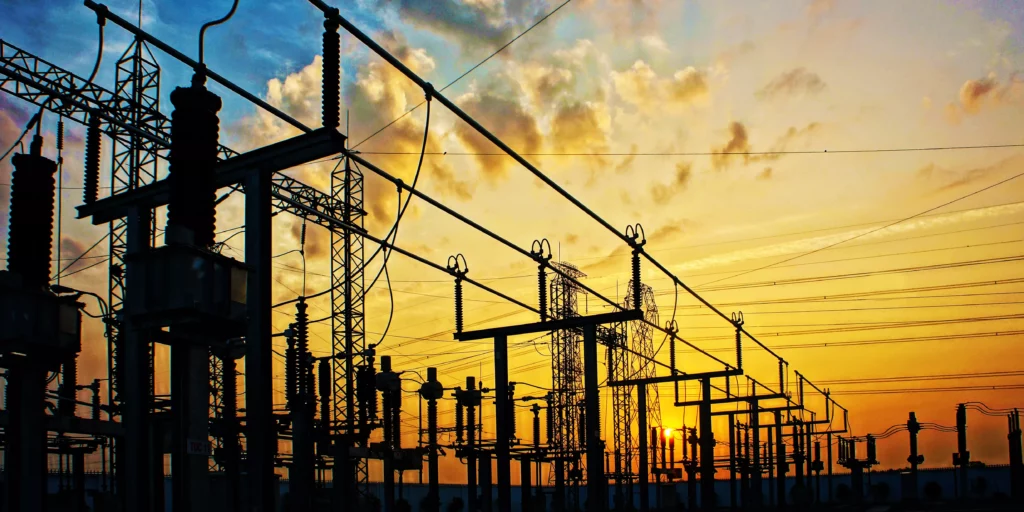
A large transmission and distribution utility may manage several hundred to several thousand power transformers. No engineering team has the capacity to apply intensive diagnostic scrutiny to every unit simultaneously. The question is not whether to prioritise, since prioritisation is unavoidable, but how to prioritise in a way that is accurate, defensible, and systematically applied.
Dissolved gas analysis is the most widely used condition monitoring tool for oil-filled power transformers, and it provides the primary data stream for fleet-level risk screening. But the value of DGA data for fleet management depends entirely on the analytical method used to interpret it. A DGA programme built on conventional threshold methods produces a list of flagged units, not a ranked risk view of the fleet.
The Problem With Threshold-Based Fleet Screening
IEEE C57.104-2019 [1] specifies concentration limits and condition classifications for dissolved gases. When a transformer's gas concentrations exceed the applicable threshold values, it is flagged for increased attention. This approach works reasonably well as a safety net for individual transformers but has fundamental limitations when applied to fleet prioritisation.
False alarms at scale. Dukarm et al. [2] demonstrated that conventional DGA thresholds, applied without population-level context, frequently flag transformers operating within normal parameters for their age, design, and service history. In a fleet of 500 transformers, even a modest false alarm rate produces a list of dozens of units flagged for follow-up that do not represent genuine elevated risk. Each false alarm consumes engineering and inspection resources; across a large fleet, the cumulative cost is substantial.
Missed detections. The inverse problem is equally important. Transformers whose gas concentrations remain below threshold values but whose trajectory, the rate and pattern of gas accumulation over their history, indicates progressive fault development will not appear on a threshold-based alert list until their concentrations cross a limit. By then, the window for planned maintenance may be narrow. Dukarm et al. [2] showed that population-based severity assessment detects this type of trajectory-based risk that threshold methods miss.
No ordinal ranking. Two transformers both in Condition 2 by IEEE C57.104 [1] receive the same classification regardless of whether one is at the low end of the range with stable trends and one is near Condition 3 with accelerating generation. The threshold framework is categorical, not continuous. It cannot rank relative risk within a condition level.
R-DGA Fleet Screening: CSEV and HF
Reliability-based DGA methodology [2][3] was designed from the outset as a fleet screening tool: a way to rank every transformer in a database by population-normalised risk, updated continuously as new DGA results are entered.
The two metrics it produces for each transformer are directly suited to fleet management:
CSEV (Cumulative Severity) integrates the fault energy indicated by the transformer's full dissolved gas history into a normalised score calibrated against a validated reference population [2]. A CSEV of 80 means the transformer's cumulative gas profile is more severe than 80% of the reference population. It sits at the 80th percentile of historical fault severity. This makes CSEV directly comparable across every transformer in the fleet, regardless of voltage class, age, or design.
The integration over history is critical. CSEV is sensitive to the pattern of gas accumulation, not just the current level. A transformer that has generated fault gases slowly over 20 years will have a different CSEV profile from one that generated the same total amount in two years. The trajectory information, invisible to point-in-time threshold comparison, is embedded in the CSEV calculation.
HF (Hazard Factor) maps the CSEV value onto the empirical relationship between condition severity and observed failure probability in the population data [2]. It answers the question fleet managers actually need answered: given this transformer's condition history, where does it sit on the failure risk curve that the population data describes?
HF is more sensitive to recent changes in the gas generation trajectory than CSEV. When a transformer's gas generation rate accelerates, HF responds more quickly than CSEV (which is diluted by the long history). This makes HF the primary indicator for identifying transformers requiring immediate attention, while CSEV provides the longer-term severity context.
What Fleet Screening Reveals
When R-DGA fleet screening is applied to a utility's transformer database for the first time, the results reliably reveal two types of finding.
The first is that a subset of transformers currently under elevated surveillance, flagged by threshold methods, have CSEV and HF profiles well within the normal population range. Their gas concentrations are elevated by absolute standards but unremarkable relative to the population. These are the threshold method's false alarms: units absorbing inspection and monitoring resources that could be better directed elsewhere.
The second finding is a different subset: transformers that have not triggered threshold flags but whose CSEV trajectory, over their full history, places them in a population segment associated with elevated failure probability. These are the missed detections: units where early intervention would be most valuable, where the detection window is still wide enough for planned maintenance.
CIGRE TB 812 [4] documents the distribution of transformer failures by age and condition; CIGRE TB 445 [5] provides the maintenance strategy framework for responding to fleet risk findings. Together, these references provide the international context for why fleet-level risk ranking, rather than individual unit threshold evaluation, is the appropriate framework for transmission transformer asset management.
Applying Fleet Screening in Practice
Transformer Oil Analyst™ (TOA) automates CSEV and HF calculation across all transformers in a database, generating a ranked fleet list that is updated each time new DGA results are imported. The list can be sorted by HF (for immediate priority ranking), by CSEV (for long-term severity history), or filtered by any combination of flags and classifications.
The practical workflow for fleet screening with TOA:
- Import or enter historical DGA results for the full fleet. The longer the history, the more informative the CSEV calculation.
- Review the fleet-ranked list sorted by HF. Transformers in the top decile warrant review regardless of their C57.104 condition level.
- Cross-reference CSEV and HF together. Units with both high CSEV and elevated HF represent the highest-concern segment of the fleet.
- For units identified as high-priority, escalate to follow-up sampling, targeted inspection, or, for the highest consequence assets, online monitoring through Monitor Watch.
The output of this process is a defensible, quantitatively grounded prioritisation list that asset managers can use directly in maintenance planning and capital budget justification.
For the technical foundations of R-DGA methodology, visit the Science page. For product details and a fleet screening demonstration, visit the TOA page or contact us.
References & Further Reading
- [1]IEEE C57.104-2019, “IEEE Guide for the Interpretation of Gases Generated in Mineral Oil-Immersed Transformers” IEEE, 2019.
- [2]Dukarm, J.J., Draper, D., Arakelian, V.K., “Improving the Reliability of Dissolved Gas Analysis” IEEE Electrical Insulation Magazine, 2012.
- [3]Dukarm, J.J., “Transformer Oil Analysis Report Interpretation by Statistical Analysis” Minutes of the 60th Annual International Conference of Doble Clients, 1993.
- [4]CIGRE Working Group A2.49, “Transformer Reliability Survey” CIGRE Technical Brochure 812, 2020.
- [5]CIGRE Working Group A2.34, “Guide for Transformer Maintenance” CIGRE Technical Brochure 445, 2011.

Delta-X Research develops Transformer Oil Analyst™ (TOA), the market-leading tool for managing and interpreting insulating fluid test data for high-voltage apparatus. Founded in 1992 and based in Victoria, BC, Canada, the team applies Reliability-based DGA methodology to help utilities worldwide assess transformer health and prioritise fleet maintenance decisions.
Related Articles
Delta-X Research at the IEEE Rural Electric Power Conference 2026
Sean Casey is representing Delta-X Research at the IEEE Rural Electric Power Conference, connecting with rural and municipal utility engineers on how Reliability-based DGA helps smaller utility operations manage transformer health analytics, identify early fault indicators, and prioritise fleet maintenance with limited internal resources.