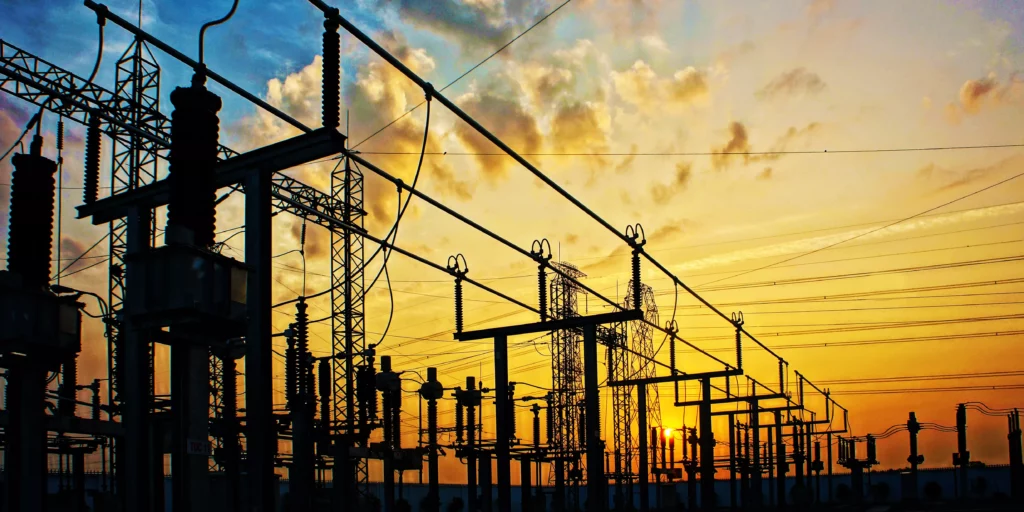
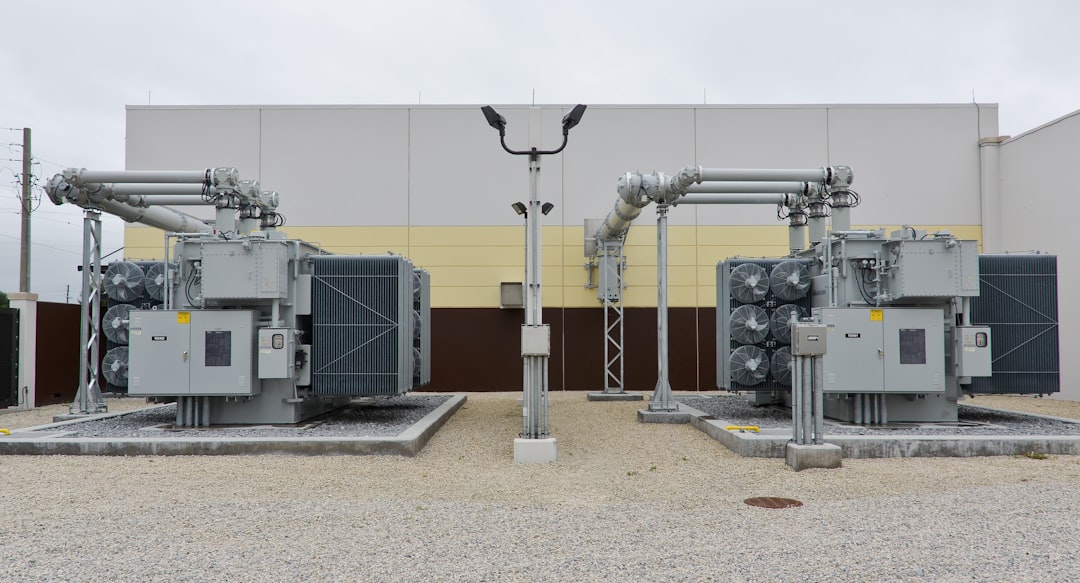
Summer is the period of maximum thermal stress for most utility transformer fleets in North America. Peak electricity demand drives loading on transmission and distribution transformers to or near nameplate ratings, ambient temperatures reduce the temperature differential available for cooling, and the combination produces hotspot temperatures that meaningfully accelerate insulation ageing.
For asset managers, summer is also the period when DGA monitoring earns its keep, and when the difference between a rigorous programme and a routine one is most consequential.
The Thermal Physics of Summer Loading
Transformer insulation ageing follows the Arrhenius relationship: the rate of thermal degradation approximately doubles for every 6–8°C increase in hotspot temperature [1]. A transformer operating at a hotspot of 110°C consumes cellulose insulation life at roughly twice the rate of the same transformer at 102°C. At 118°C, the ageing rate doubles again.
During summer peak loading, hotspot temperatures rise for two compounding reasons. First, load-generated heat increases with the square of the current (I²R losses) as loading increases. Second, ambient temperatures reduce the effectiveness of oil and forced-air cooling systems, which are designed for a specific temperature differential that narrows as ambient heat rises. A transformer loaded at 105% of nameplate rating on a 35°C day operates at materially higher hotspot temperatures than the same transformer at the same loading on a 20°C day.
This is not a marginal effect. McNutt [1] demonstrated that peak summer loading events, even relatively brief periods of overloading during heat waves, can consume insulation life equivalent to months of normal operation. Transformers in transmission substations serving peak air conditioning load may be exposed to repeated 90–120 minute overload events over the course of a summer that collectively represent a significant fraction of their remaining design life.
The DGA Signal of Thermal Stress
Elevated hotspot temperatures produce characteristic dissolved gas signatures that DGA monitoring can detect [2]:
Oil decomposition gases. Thermal decomposition of mineral oil at temperatures above approximately 150°C generates hydrogen (H₂), methane (CH₄), and ethane (C₂H₆). As temperatures rise above 300°C, ethylene (C₂H₄) becomes the dominant product. Above 700°C, typically associated with high-energy arcing or extremely localised overheating, acetylene (C₂H₂) appears [3]. A trend toward increasing ethylene and methane relative to ethane in consecutive DGA samples indicates rising hotspot temperatures.
Cellulose degradation gases. The thermal decomposition of cellulose paper insulation generates carbon monoxide (CO) and carbon dioxide (CO₂) [2]. Elevated or rising CO and CO₂ concentrations, particularly when accompanied by other thermal decomposition gases, indicate cellulose insulation deterioration. The CO/CO₂ ratio provides additional diagnostic information: values below approximately 3 typically indicate normal CO₂ production; values above this suggest active cellulose degradation at elevated temperatures. Monitoring CO and CO₂ trends through the summer loading season provides a direct indicator of cumulative insulation stress.
IEEE C57.104-2019 [2] specifies concentration limits and condition classification guidance for each of these gases. However, the concentration limits in C57.104 were developed as population averages and do not account for the rate of change that summer loading can drive in individual units.
Why R-DGA Matters More in Summer
The summer period is precisely when the limitations of threshold-based DGA interpretation are most consequential. A transformer operating at high summer loading may accumulate fault gas rapidly, not because a discrete fault has occurred, but because sustained high-temperature operation is generating thermal decomposition products at an elevated rate. Against C57.104 thresholds [2], this rapid accumulation may produce false Condition 2 or 3 classifications for units that are experiencing normal (if elevated) thermal stress rather than an abnormal fault event.
The inverse problem also intensifies. A transformer with a pre-existing fault mechanism, such as partial discharge, a loose connection, or incipient turn insulation failure, may accelerate significantly under summer loading conditions. If its gas concentrations were below threshold values in the spring sample, the summer's accelerated generation may not appear in a laboratory result until the autumn sampling round. By then, the fault may be substantially more advanced.
Reliability-based DGA methodology [4] addresses both scenarios. The CSEV metric integrates fault severity across the full sample history, making it sensitive to acceleration patterns. A step change in the rate of gas accumulation that follows the onset of peak loading conditions will be reflected in the CSEV trajectory. The Hazard Factor [4] responds to current gas generation rate, which means that a transformer generating gases more rapidly in summer will show an elevated HF that directs attention to it before concentrations cross any threshold.
Online Monitoring for High-Consequence Summer Assets
For transmission transformers where the consequence of unplanned outage is highest, particularly units with no backup, serving critical load, or with known elevated CSEV histories, summer is the period when the value of continuous online DGA monitoring is most clearly justified.
Monitor Watch applies R-DGA analysis to gas-in-oil sensor data in near-real time, providing rate-of-change alerts when dissolved gas generation accelerates. The lead time advantage is concrete: a thermal fault developing over days or weeks is detectable well before any laboratory sampling window. For a transmission transformer serving peak summer load with an 18–24 month replacement lead time [5], early detection of a developing fault may be the difference between a planned maintenance outage during a controlled window and an emergency outage at peak demand.
CIGRE TB 812 [5] documents that transformer failures occur disproportionately during periods of high loading stress, which in most North American utility systems means summer. This is not coincidental: the thermal mechanisms described above accelerate fault development under exactly the conditions that occur during peak season. A monitoring programme calibrated to detect that acceleration is the appropriate operational response.
Preparing Your DGA Programme for Summer
Several practical steps improve the effectiveness of DGA monitoring during the peak loading season:
Review CSEV and HF rankings before peak season. The highest-HF transformers in your fleet deserve prioritised attention before summer loads develop. An elevated HF entering the summer loading period is more concerning than one that develops after sustained loading, because the pre-summer trajectory already indicates elevated fault activity before the additional thermal stress is applied.
Increase sampling frequency on identified high-risk units. IEEE C57.104 [2] recommends quarterly sampling for higher-condition units as a minimum. For transformers in the upper quartile of fleet HF, monthly sampling during peak loading season is a reasonable practice given the rate at which conditions can develop.
Ensure laboratory turnaround time is adequate. Summer sampling provides value only if results are returned and reviewed promptly. A laboratory turnaround of four weeks makes monthly sampling nearly useless for detecting rapid fault development; two-week turnaround is the practical maximum for the strategy to work.
Deploy online monitoring on critical assets. For the subset of the fleet combining high consequence and elevated risk metrics, the investment in continuous monitoring is justified by the reduction in exposure to peak-season unplanned outages.
For further reading on DGA methodology and fleet monitoring strategy, visit the Science page and the Learn page. For product details on TOA and Monitor Watch, visit their respective product pages, or contact us to discuss your programme.
References & Further Reading
- [1]McNutt, W.J., “Insulation Thermal Life Considerations for Transformer Loading Guides” IEEE Transactions on Power Apparatus and Systems, 1992.
- [2]IEEE C57.104-2019, “IEEE Guide for the Interpretation of Gases Generated in Mineral Oil-Immersed Transformers” IEEE, 2019.
- [3]Duval, M., “A Review of Faults Detectable by Gas-in-Oil Analysis in Transformers” IEEE Electrical Insulation Magazine, 2002.
- [4]Dukarm, J.J., Draper, D., Arakelian, V.K., “Improving the Reliability of Dissolved Gas Analysis” IEEE Electrical Insulation Magazine, 2012.
- [5]CIGRE Working Group A2.49, “Transformer Reliability Survey” CIGRE Technical Brochure 812, 2020.
- [6]IEC 60599:2022, “Mineral oil-filled electrical equipment in service: Guidance on the interpretation of dissolved and free gases analysis” IEC, 2022.

Delta-X Research develops Transformer Oil Analyst™ (TOA), the market-leading tool for managing and interpreting insulating fluid test data for high-voltage apparatus. Founded in 1992 and based in Victoria, BC, Canada, the team applies Reliability-based DGA methodology to help utilities worldwide assess transformer health and prioritise fleet maintenance decisions.
Related Articles
Delta-X Research at the IEEE Rural Electric Power Conference 2026
Sean Casey is representing Delta-X Research at the IEEE Rural Electric Power Conference, connecting with rural and municipal utility engineers on how Reliability-based DGA helps smaller utility operations manage transformer health analytics, identify early fault indicators, and prioritise fleet maintenance with limited internal resources.